

The Faculty of Environmental and Urban Change brings together geographers, physical scientists, social scientists, humanities researchers and artists whose innovative research seeks to advance sustainability and social justice. Using field-based science, policy analysis, critical social theory, planning skills, geomatics, and cultural and arts-based approaches, our researchers drive action to address the world’s environmental and urban challenges.

By the Numbers
48
Faculty researchers
57
Research projects as of 2026
33
Countries engaged in research
$10M
Research funding
Research Spotlights

CITY-EUC welcomes new postdoctoral researcher
Dr Tilen Kolar Dr Tilen Kolar is a critical human geographer at the CITY Institute and the Faculty of Environmental and Urban Change. Tilen recently completed his PhD at the University of Leeds (UK) on queer mobilities and spatial scale ...

Expanding the Greenbelt in an expanding city
Ute Lehrer introducing Eva Schwab EUC recently welcomed Assistant Professor Eva Schwab from the Faculty of Architecture at TU Graz, Austria on the invitation of EUC Professor Ute Lehrer as a short-term visiting scholar at York. This September, she delivered ...

Assessing the adaptive capacity of social-ecological systems
Jaqueline Aparecida Bória Fernandez EUC recently welcomed Assistant Professor Jaqueline Aparecida Bória Fernandez from the Instituteof Cities, Federal University of São Paulo (Unifesp), Brazil, where she also serves as a researcher in theResearch Group on Landscape, Society, and Urban Dynamics. ...
Canadian Association of Geographers Annual Meeting 2027
The 77th annual meeting of the Canadian Association of Geographers will be hosted by the Faculty of Environmental and Urban Change on May 31 - June 3, 2027. The conference will consist of four days of sessions, posters, field trips, social events and keynote lectures. Geographers and allied researchers from across the discipline and around the world are warmly invited. The conference will be in-person only, with no online or hybrid formats.
The overall conference theme is ‘Geographical Stories / Récits Géographiques’ - a theme that signals the diverse forms of geographical knowledge production that the conference will encompass; and, the importance of translating and mobilizing geographical research through compelling stories.
Further details can be found on the main conference website.
Inquiries can be sent to CAG2027@yorku.ca

EUC Research Update

EUC Research Update
Welcome to the September/October 2026 edition of the EUC Research Update - bringing you highlights from research activities at York's Faculty of Environmental & Urban Change.
Research Accolades

It is with deep sorrow that we are sharing the sad news about the passing of Dr. Sheila Colla. A Professor at the Faculty of Environmental and Urban Change at York University, Dr. Colla was a pioneering conservation scientist and educator whose work bridged the gaps between pollinator health, urban ecosystems, and social justice. As one of the first scientists to quantitatively document the decline of a wild bee species, she played a pivotal role in the successful campaign to have the rusty-patched bumblebee listed as endangered in both Canada and the U.S. Her scientific expertise has been crucial in shaping pollinator advocacy, inspiring several campaigns that engage both citizens and policymakers alike. Dr. Colla co-founded BumbleBeeWatch.org, a citizen science initiative that has collected over 172,000 photo records of bumblebees across North America. Her efforts have not only transformed public understanding but have also earned her numerous accolades, including the Ontario Nature Education Award, the York University President's Research Impact Award, the Entomological Society of Canada’s C. Gordon Hewitt Award, the American Library Association’s Outstanding Reference Source Award, and most recently the NSERC Prize for Science Promotion and the King Charles III Coronation Medal. Dr. Colla was the York Research Chair Tier II in Interdisciplinary Conservation Science 2020-2025. Dr. Colla was also a trusted voice in science communication, speaking on platforms such as CBC, Reuters, CNN, The Washington Post, and CTV National to reach millions of people. Her written work—including opinion pieces, articles, and books like The Bumblebees of North America: An Identification Guide and A Garden for the Rusty-Patched Bumblebee—has made pollinator conservation more relatable and actionable for Canadians, offering practical ways for people to support native pollinators right from their backyards. Throughout her career, Dr. Colla exemplified leadership in both science and advocacy, especially as a woman of colour in STEM. A role model for aspiring scientists and active contributor to initiatives that promote diversity and equity in the field, Dr. Colla was dedicated to her outreach efforts, mentoring young ecologists and citizen scientists, and inspiring others to take part in the conservation movement.
EUC is proud to announce its latest recipients of Tri-Council grants as well as non-government and industry contracts. From social sciences to health and natural sciences, our projects reflect the interdisciplinarity and diversity of the Faculty's research. From scientific discoveries to impactful social and cultural insights, the work of our faculty, postdocs and students reflects our commitment to fostering a collaborative and vibrant research environment on questions of critical global concern.

Dean Alice Hovorka received a SSHRC Insight Grant for her research on "Animal Performativity: Becoming Primate’ in Human Society." The research will feature case studies of non-human primates by exploring the lives of macaques, orangutans and howlers in order to unearth human-primate relations. She will be working with Siobhan Speiran who received a Canada Postdoctoral Research Award and whose research explores intersections of sustainable tourism, multispecies governance, animal welfare, and wildlife conservation.

Sarah Rotz received a SSHRC Partnership Development Grant for her research "Confronting Financialization, Consolidation, and Settler-Colonial Agri-Food Land Governance in Canada." The project will co-produce knowledge with Indigenous Nations, community land stewards, Chiefs of Ontario (COO), National Farmers Union (NFU), and regional collaborators to examine how financial and governance shifts impact land justice to advance relationally accountable models for just and decolonial land stewardship in the agri-food sector. She also received a SSHRC Partnership Engage Grant to do a feasibility study on public grocery stores in Canada.

Sarah Flicker received a SSHRC Insight Development Grant for her research with Shira Taylor on “Performing Prevention Pedagogies: Exploring the Use of Theatre for Sex Education with Pre-Service Teachers.” The project will address a persistent gap in teacher education, particularly on sensitive topics such as consent, relationships, identity, mental health, and sexual well-being. She is also a co-applicant on a successful SSHRC Connection Grant application with LA&PS Professor Richard Saunders as PI on "Image as Voice: Perspectives on Lithium Extraction in Argentina and Zimbabwe."
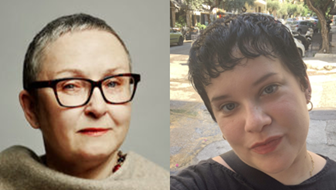
Linda Peake received a SSHRC Insight Development Grant for her research on "Place, Body, and Mind: Creating community-based mental wellness tools for graduate students in Canadian universities." She will be working with CITY postdoc fellow Mantsa Katsikana on this project to deepen research on graduate student wellbeing, focusing on those facing intersecting types of marginalization and precarity, while conceptualizing the mental health crisis in academia not as an accumulation of individual vulnerabilities but as a structural condition that prioritizes productivity, competition and constant performance.
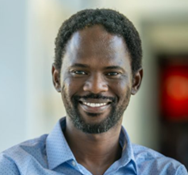
Adeyemi Olusola received an NSERC Discovery Grant for his research "Advancing hydrogeomorphological understanding and monitoring of headwater catchments in Southern Ontario." The study will offer novel, integrated approach to understanding the hydro-geomorphological functioning of river systems, with a unique focus on the spatial organization and dynamic linkages within Southern Ontario’s post-glacial headwater catchments. The development of spatial datasets, models, and non-contact monitoring tools will present significant advancement in evidence-based watershed planning, prioritizing ecological integrity, equity, and resilience.

Carlota McAllister's collaborative project on "Vernacular spiritualities in environmental and disaster risk management from the bottom up" with Universidad de los Andes - Colombia received seed funding from the Hemispheric University Consortium (HUC). The Consortium is a selective alliance of universities across the Americas, including institutions from Latin America, the Caribbean, Canada, and the United States, committed to fostering collaborative academic and research endeavours that respond to global and regional challenges. Through coordinated research initiatives, shared infrastructure, and academic partnerships, HUC member institutions work together to strengthen higher education and research capacity throughout the Americas.

Martina Jakubchik-Paloheimo received a Canada Postdoctoral Research Award for her research on human-polar bear co-existence in Hudson Bay and James Bay with Omushkego communities along the coast. Her community-engaged research supports Omushkego Knowledge and Polar Bear Conservation in a community-led project to identify the drivers of, and effective mitigation strategies for, human-polar bear interactions. She is also working with the Mushkegowuk Council, which represents and serves Omushkego Cree communities in Northern Ontario, towards advancing Indigenous-led polar bear conservation.
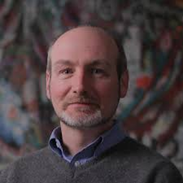
Mark Winfield received a Clean50 Lifetime Contribution Award in recognition of his significant role in Canadian environmental policy since 1992. Canada’s Clean 50's Lifetime Contribution Award recognizes senior sustainability leaders whose careers have advanced environmental protection and climate resilience in Canada. At York, Mark's research has focused on sustainable energy, climate change, environmental law and public policy. He serves as co-chair of York’s Sustainable Energy Initiative and is co-founder of the Ontario Network for Sustainability Energy Policy and helped establish the Energy Modelling Hub as a nationally recognized resource.

Leesa Fawcett is part of a successful Partnership Development Grant (PDG) led by Collen Dell of University of Saskatchewan. The project "Establishing a Network for Human-Animal Connections Research and Collaboration" aims to create a cross-cultural, transdisciplinary collaborative network to comprehensively study and convey how connections between human and non-human animals influence, interact with, and impact their shared experiences on individual, communal, and societal levels.
Andil Gosine is also part of a Partnership Development Grant ed by Jill Didur of Concordia University. The project "(Re)Thinking Sustainability: Research Network for Global Environmental Humanities" will strengthen institutions and partners’ capacities to respond to the complexity of sustainability issues through better understanding of the relation between planetary health and human well-being.

Esmond Lee, EUC PhD candidate in Environmental Studies, has been awarded the Susan Mann Dissertation Scholarship for 2026-2027. The scholarship assists outstanding doctoral students in their final year of doctoral study to concentrate exclusively on and complete their dissertations.
Lee is an community artist, architect and doctoral student in Critical Human Geography. His research deals with migration, class and capitalism, settler colonialism, and informal spatial (re)production in Toronto’s urban periphery.

Charlotte Minnes (MES 2026) received the 2026 CIP-PSTF Outstanding Graduating Student Award. The Canadian Institute of Planners-Planning Student Trust Fund (CIP-PDTF) Outstanding Graduating Student Award recognizes one graduating student from each accredited planning program (undergraduate and postgraduate) in Canada, who has demonstrated an outstanding contribution to their future profession. Minnes' major paper focuses on Toronto Waterfront’s Revitalization: Planning Policy’s Evolution and Commitment to Public Space Over Time with Liette Gilbert as her supervisor. Following graduation, she joined the Department of National Defence as a Land-Use Planner within the Real Property Portfolio Planning Team.

Brian Waters, EUC PhD candidate in Goegraphy, received a MITACS Globalink Research Award for his PhD research titled "From Insecurity to Strategy: Making Community Water Solutions Legible in Freetown, Sierra Leone" with Martin Bunch as academic supervisor.
Waters studies water security in West Africa focusing on gender, participatory action research, and decentralized water infrastructure in urban settings. He has completed nearly half a year of water justice data collection in March and now wrapping up a year of field work in Freetown, Sierra Leone.
EUC Research & the United Nations Sustainable Development Goals

EUC Research for Sustainable Development
The UN SDGs provide a framework for urgent action in seventeen areas that are critical to ensure peace and prosperity for people and the planet. York University has embedded a commitment to the SDGs into its academic planning, and EUC is at the forefront of research on many of the SDGs.
